With the advent of digital guitar amp modelers, Impulse Responses (IRs) have become one of the most widely used technologies in modern guitar tone production. Their adoption has grown so significantly that the term “IR” is now often used as shorthand for “guitar cabinet modeling”, regardless of the underlying method used to reproduce speaker cabinet behavior.
This reflects both the popularity and practicality of convolution-based workflows, but it also obscures the fact that cabinet simulation can be approached in fundamentally different ways.
What Is an Impulse Response?
An impulse response is a measurement-based representation of how a system behaves when stimulated by a short impulse signal. In signal processing terms, it captures the linear, time-invariant characteristics of that system and expresses them as a digital filter implemented through convolution.
In guitar applications, IRs are typically used to capture the sonic imprint of a complete recording setup, including:
- Speaker cabinet and speaker response
- Microphone type and placement
- Room reflections
- Additional coloration from the recording chain (preamp, converters, etc.)
When a guitar signal is processed through a convolution engine, it is filtered by this captured response, reproducing the tonal fingerprint of the original setup.
The result is often highly “realistic” and mix-ready with minimal additional processing, as impulse responses often includes the entire capture and (static) processing chain.
What Are the Alternatives?
While IR-based workflows dominate modern guitar production, they are not the only approach to cabinet simulation.
Analog and Hardware Emulation
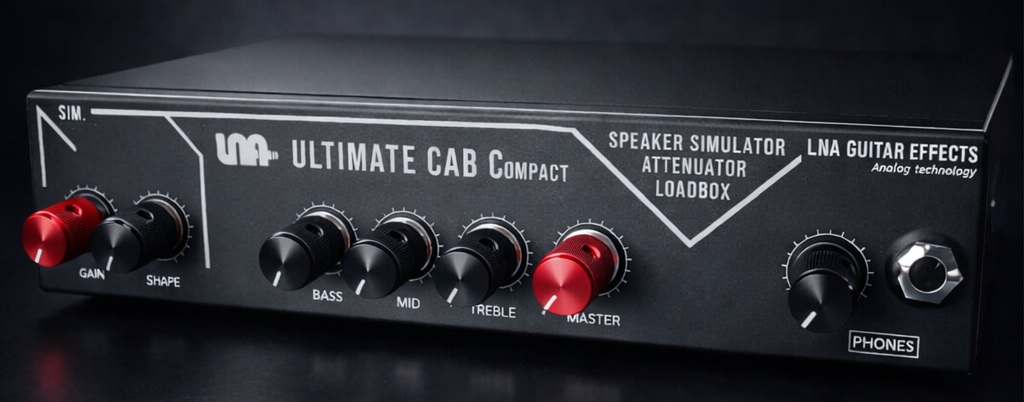
Some systems rely on analog filtering circuitry to approximate cabinet behavior, such as the SansAmp, Palmer speaker simulators, LNA Guitar FX‘s Ultimate Cab, which are usually paired with an amp simulator or a load box to connect to a guitar amplifier. These approaches tend to favor musical response and immediacy over exact capture fidelity.
Algorithmic Filter-Based Modeling
Other systems use digital models built from filter networks and nonlinear processing rather than recorded captures. These approaches simulate cabinet behavior dynamically, often exposing higher-level parameters such as resonance, damping, or frequency-dependent distortion.
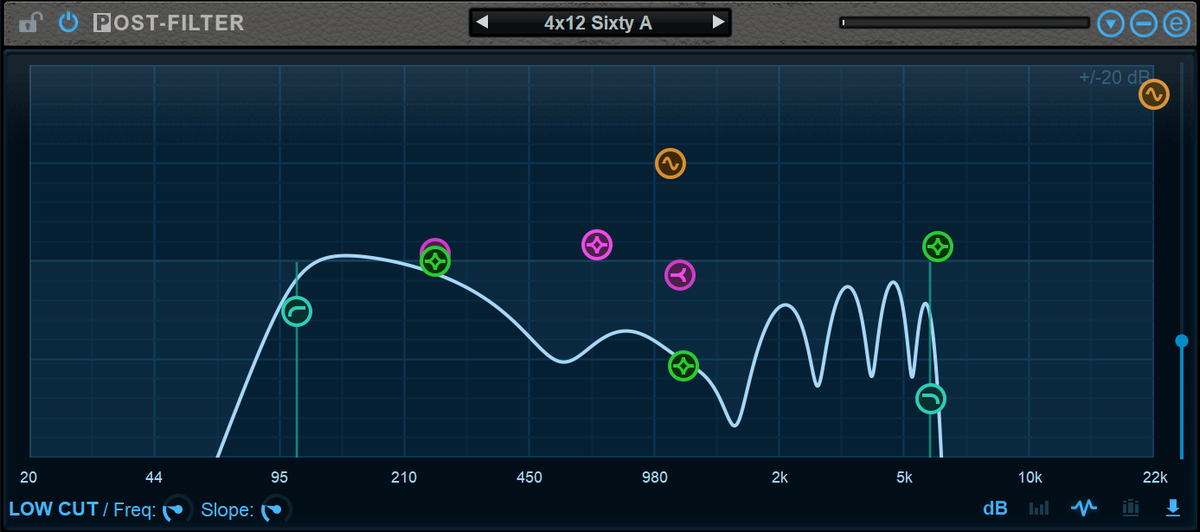
In this category, tools such as Blue Cat’s Destructor (the amp modeling engine built into Axiom) combine analog-style distortion modeling with flexible analog-style filtering structures, allowing cabinet-like behavior to be shaped as part of a broader tone design process rather than fixed at capture time. Destructor also offers additional coloration options through techniques such as comb filtering, which can help recreate a sense of “in-the-room” character that is often associated with impulse responses.
These techniques can be compared to the difference between synthesis and sampling in sound design. Impulse Responses behave like a form of acoustic sampling: they reproduce a fixed, recorded snapshot of a specific system. In contrast, analog-style filtering and modeling approaches behave more like synthesis, where the goal is to recreate or approximate system behavior through controllable parameters rather than fixed captures. While this offers significantly greater flexibility and adaptability, it does not guarantee exact replication of a specific recorded tone in the same way an IR can.
The Pros of Impulse Responses
Snapshot of a Real-World Recording Chain
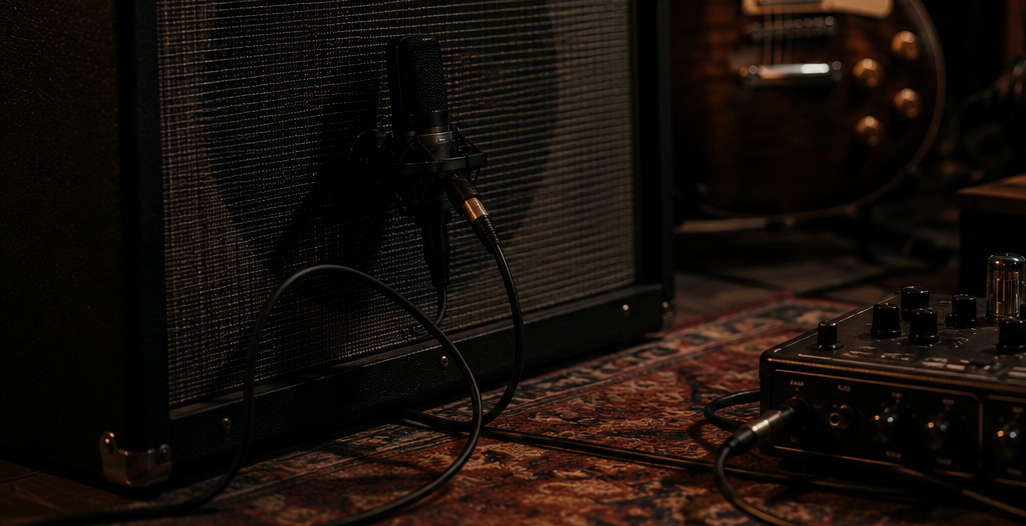
An IR captures a complete, fixed snapshot of a recording environment at a specific moment. This makes it highly effective for recreating known tones with strong fidelity and consistency.
High Level of Detail
Well-produced IRs can preserve subtle sonic characteristics such as:
- Speaker response
- Microphone frequency curves
- Off-axis coloration
- Cabinet resonances
Ease of Use
The workflow is straightforward: load an IR into a convolution engine, and the tone is immediately transformed. No parameter design is required, which makes IRs extremely accessible.
Efficiency and Low Latency
Convolution processing is now computationally efficient on modern systems. It combines low CPU usage, no extra latency and small file sizes. This makes IRs practical even in large multi-track sessions.
The Cons of Impulse Responses
Embedded Chain Coloration and Environmental Stacking
The main limitation of IRs is the fact that they capture an entire static recording ecosystem in a single file. A typical IR includes:
- A specific microphone model
- A fixed microphone position
- A particular room or acoustic environment
- Coloration from the capture chain itself
This creates a tightly defined tonal fingerprint that cannot be separated from its capture context.
In studio environments, when you want to simulate a “real-world” recording, this works mostly well because the IR replaces the whole system entirely (including the room). In live environments, however, the situation becomes more complex. The processed signal is re-amplified into a new physical space, resulting in a layering of acoustic environments:
- The original capture room
- The PA system / FRFR cab response
- The venue or stage acoustics
This “stacking” of spaces can reduce clarity and make results less predictable, usually adding unwanted extra coloration to the guitar tone. You may also encounter similar problems in the studio when stacking effects/reverbs on top of the original recording, or if you simply want to escape from the usual guitar tones resulting from “traditional” recording methods.
Time Investment and Decision Overload
Another practical drawback is the selection process. Because each IR encodes a complete microphone-and-room configuration, choosing one is not a simple tonal adjustment. It is a decision involving:
- Microphone type
- Microphone placement
- Distance and axis
- Room character
- …
As a result, finding the right IR often involves auditioning many near-variations of the same setup. In practice, this can become time-consuming, especially when refining tones across multiple tracks or projects.
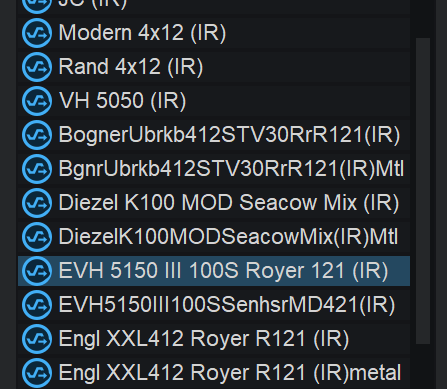
Instead of shaping sound directly, users are often navigating a large library of pre-baked recording decisions. How many guitarists and sound engineers haven’t spent hours (or even days) scrolling through massive IR libraries without ever quite landing on the right tone?
Lack of Semantic Control
IRs do not expose musically meaningful parameters. There is no direct control over concepts such as damping, frequency response, brightness, low-end resonance…
All variation is achieved by switching between different captured files with often cryptic names (usually based on technical studio recording parameters) rather than adjusting underlying behavior. This reduces exploratory flexibility and shifts the workflow toward selection rather than design.
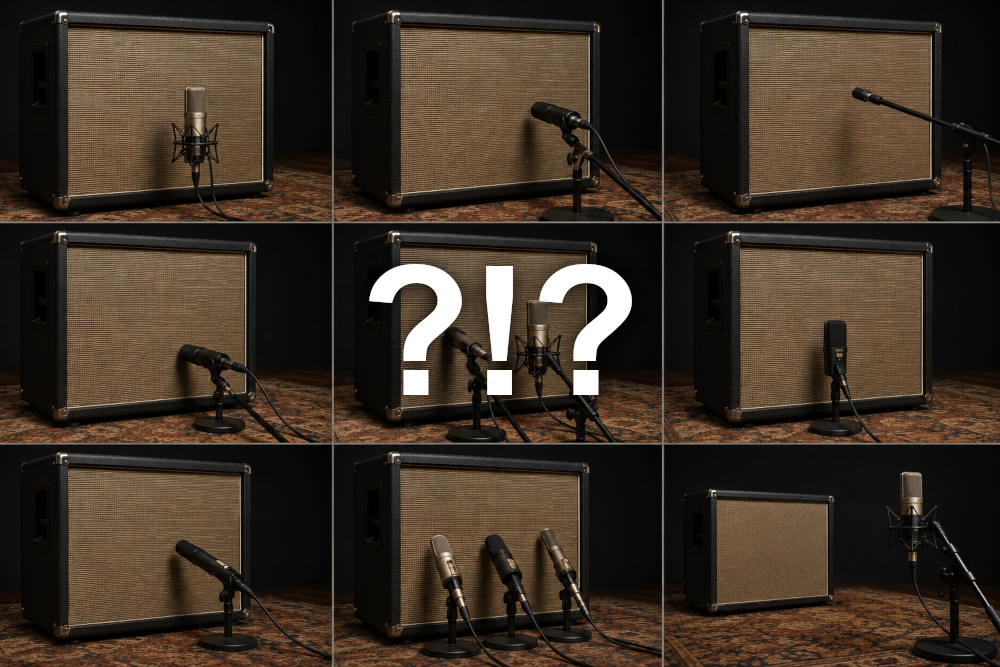
It also artificially reproduces “real world” sound capture problems, raising questions about studio recording techniques that you could entirely avoid while working in a virtual space: if you are not familiar with all sorts of guitar and studio gear, finding the right sound can become a slow and trial-and-error process.
Tonal Rigidity and Perceptual Convergence
Because an IR encodes a complete fixed chain, its tonal identity is strongly tied to a specific capture methodology. While this is useful for accuracy, it also introduces a longer-term perceptual effect: tonal convergence.
When working extensively with IR-based cabinets (especially within similar capture styles) different tones can begin to feel increasingly alike. This occurs because variation is constrained to permutations of the same fundamental variables: speaker, microphone, placement, room and capture system.
Over time, this can lead to:
- Different IRs feeling like small variations of the same sound
- Reduced sense of tonal discovery
- A narrowing of perceived sonic diversity
This is not a flaw in quality, but a structural consequence of the IR paradigm: it excels at realism within a defined capture space, but that space itself is inherently limited. Also, over time, widespread use of the same IR libraries can contribute to a degree of tonal homogenization, where different guitarists begin to share increasingly similar core sounds.
Variability in Quality
IR quality depends heavily on capture methodology, including:
- Microphone choice and placement accuracy
- Room conditions
- Post-processing decisions
- Source cabinet and signal chain
- Length of the IR (number of samples).
As a result, consistency can vary significantly between different IR libraries, even when they are targeting similar cabinet types or microphone setups.
Warning: even if you use long high quality impulse responses, some IR loaders truncate impulse responses to a fixed length, reducing the quality of the response in the low-end.
Destructor’s Hybrid “Cabinet Modeling” Approach
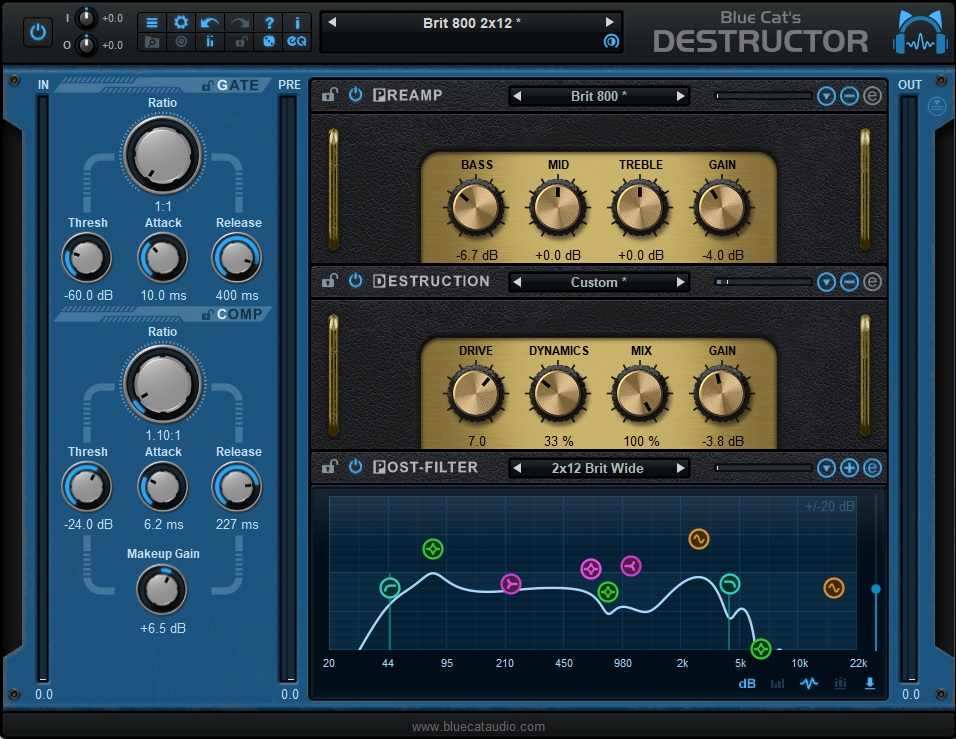
Rather than treating cabinet simulation as either a fixed capture or a fully synthetic model, Destructor aims at providing the best of both worlds: it integrates both approaches within a single workflow, as part of a broader model for guitar amp tone shaping.
IR Loading and Structural Manipulation
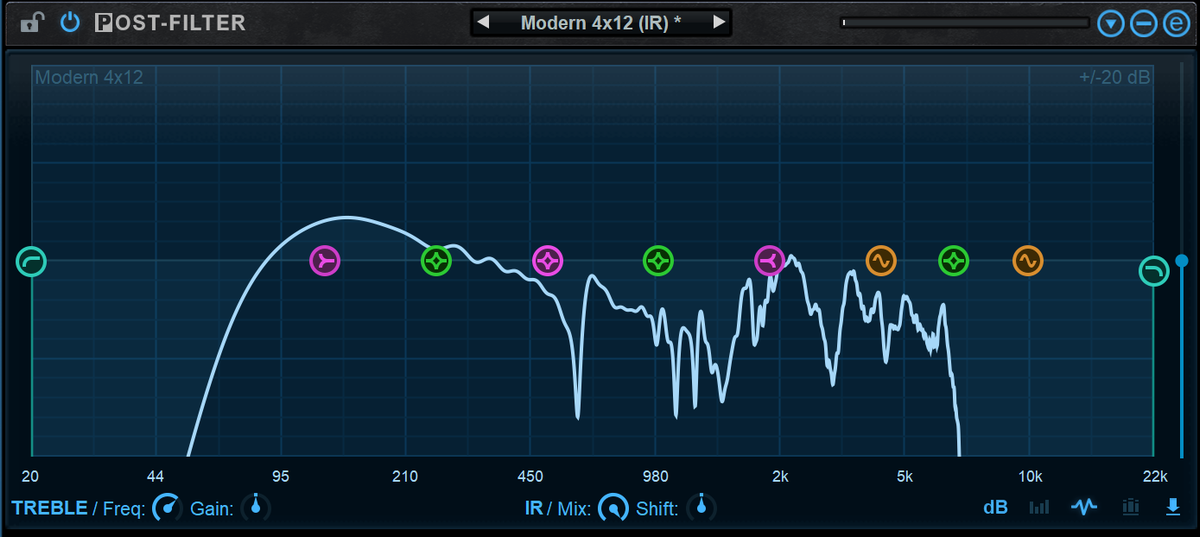
Within Destructor, Impulse Responses can be loaded directly, and they can be reshaped and integrated into a broader signal architecture that includes analog-style processing and nonlinear modeling stages.
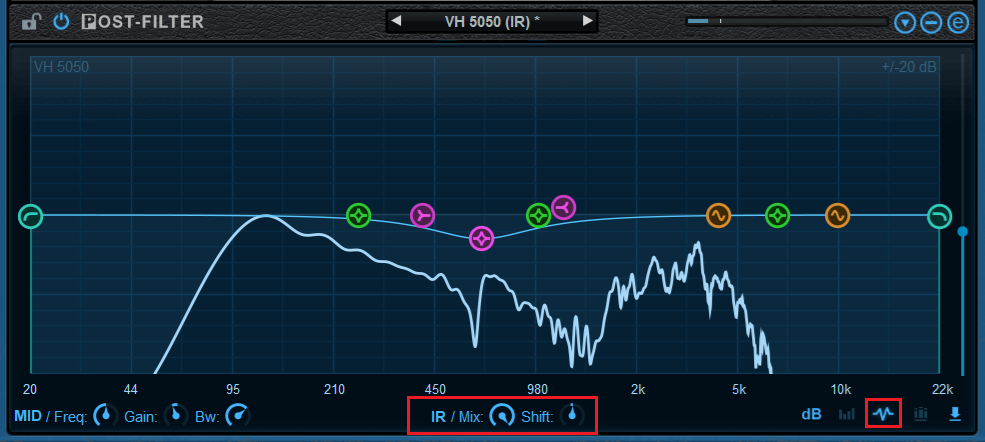
Once loaded, IRs can be:
- Blended with analog-style filtering
- Reshaped using spectrum shifting
- Positioned before or after nonlinear stages
- Integrated into multi-stage tone chains
This turns convolution into one component of a larger modeling system rather than a final processing step. Also, Destructor’s IR loader has no limit regarding the length of IRs you can load (you can even load long reverb IRs if you wish), so it will respect the response of the original recording.
Note: it is worth noting that impulse responses are not limited to guitar cabinets. They are also commonly used to capture room and convolution reverbs, among other linear system responses. In Destructor, IRs can also be loaded in the pre-filter section, which opens up additional creative uses, such as applying impulse responses of preamplifiers (captured in a clean, linear operating mode). This allows IRs to be used not only for cabinet coloration, but also as a way to introduce specific front-end tonal characteristics earlier in the signal chain.
Advanced Analog-Style Filtering
The post-filter section is not a simple EQ, but a flexible filtering system capable of combining multiple filter types, including resonant peaks, shelving curves, and comb-filter structures. This allows much more complex shaping than traditional tone controls and let you synthesize frequency responses that are close to “real” guitar cabinets.
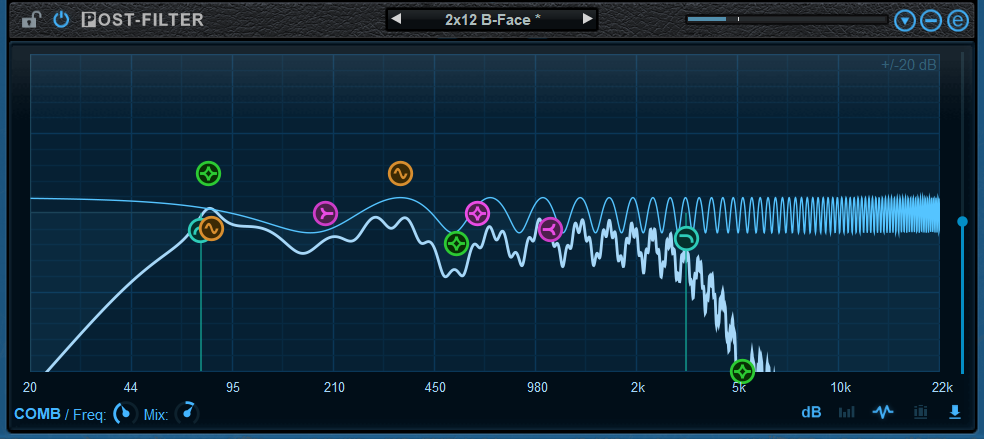
Also, by loading or analyzing reference curves from real guitar tones or cabinet responses, the post-filter can be adjusted to match or approximate the overall spectral balance of a target sound. This turns the filtering stage into a form of tonal comparison tool rather than just a static EQ section, making it easier to translate real-world cabinet characteristics into a controllable model.
Comb-filter processing adds another layer of character that can simulate mic interference patterns, cabinet reflections, or room-related coloration. When used subtly, this can help recreate the sense of depth and “in-the-room” presence often associated with multi-microphone or real acoustic setups.
Guitar Amp as a Whole: Nonlinear Stages Integration
Destructor uses a unified signal design that models the behavior of a complete guitar amp tone, rather than treating the cabinet as a completely separate processing block.
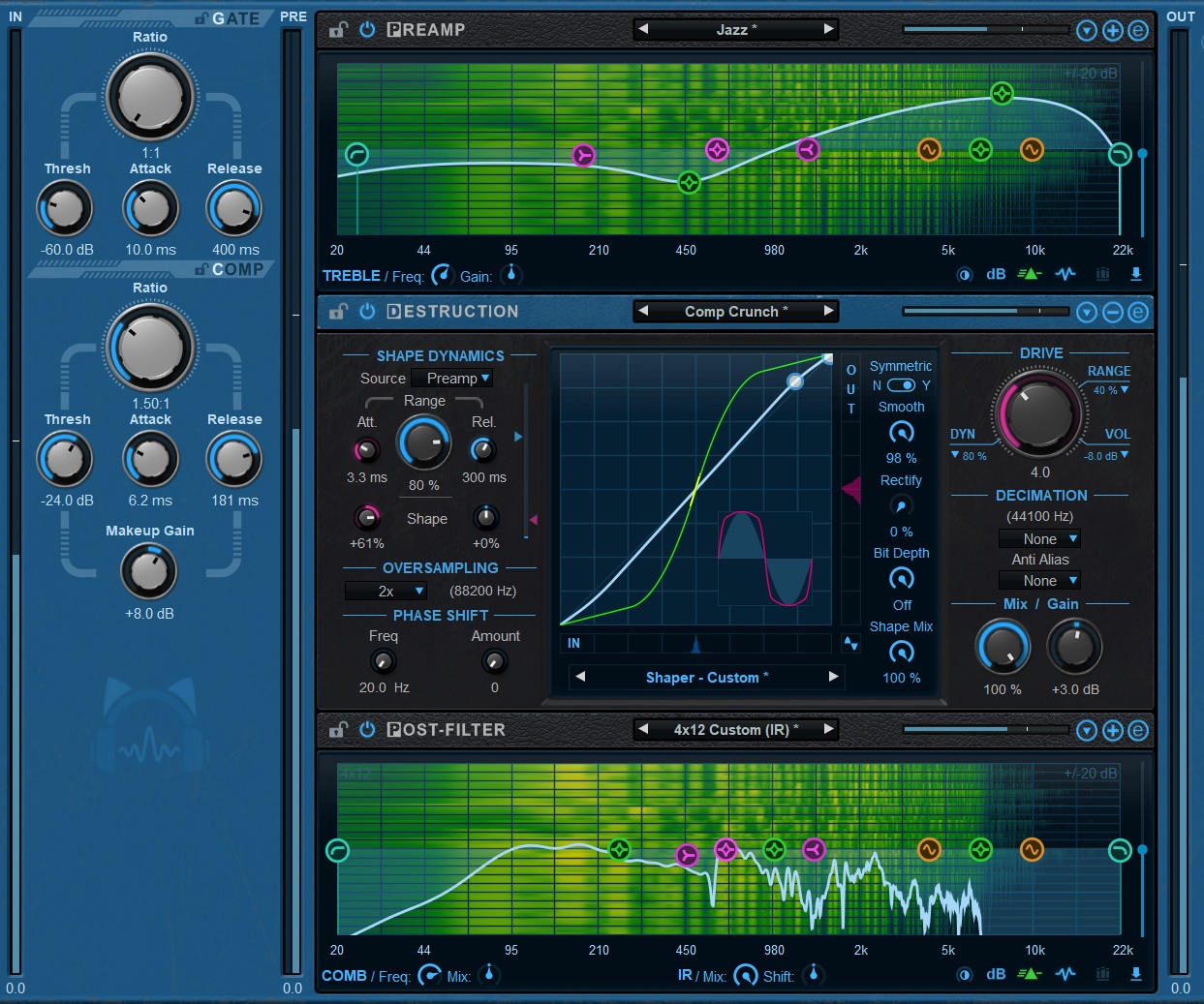
Under the hood, filtering, saturation, and nonlinear response all interact as part of the same system. Pre-filter stages shape how the signal drives the distortion (roughly similar to a preamp), while post-filter stages help define the final tone and can take on characteristics typically associated with speaker cabinets, but not quite (extra coloration may happen from the amp and other processors in the chain).
These sections are still presented in a familiar preamp/cabinet format for usability, even if they do not always reflect exactly what is happening under the hood. The tight integration between components makes the whole system more than just the sum of its parts, as shown below.
Tone Maps and Structured Tone Navigation
A key extension of this approach is the use of Tone Maps, which provide a structured method for organizing complex tonal variations. Tone Maps extend this synthesis-oriented approach by organizing controls into a structured parameter space navigation system.
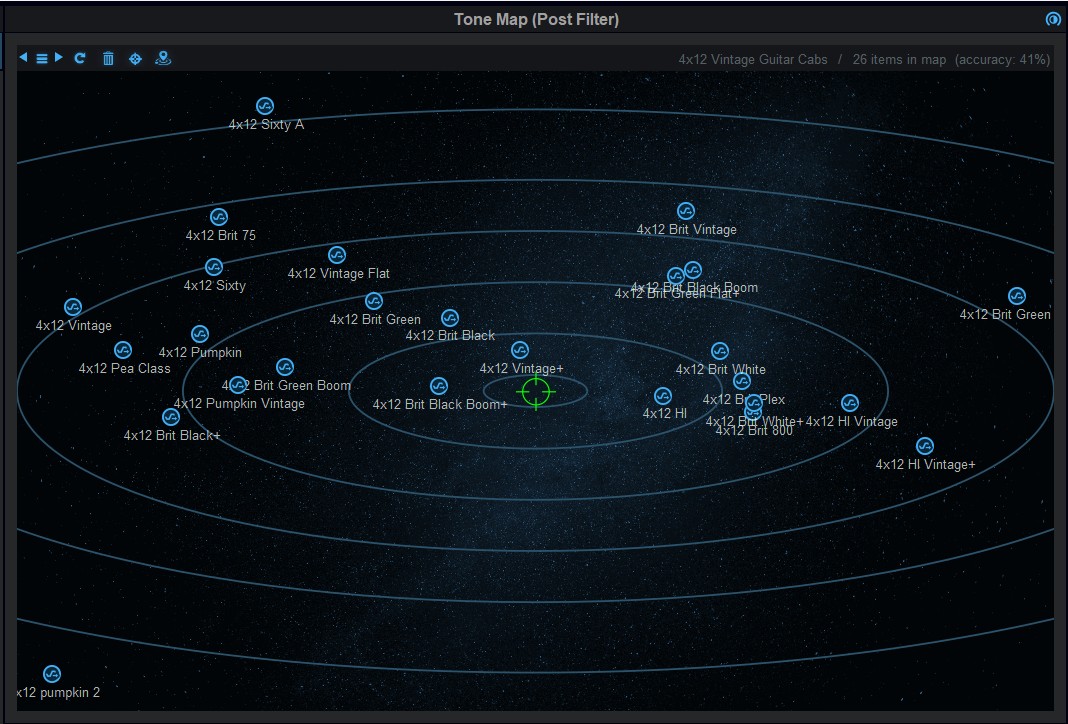
Instead of selecting between fixed IR “samples”, or adjusting isolated parameters independently, Tone Maps define a multidimensional space where tonal behavior can be explored continuously.
This enables smooth movement between distinct tonal behaviors and exploration of unique guitar cabinet sound spaces rather than fixed presets.
This turns sound design into a more intuitive navigable system rather than a collection of static presets or capture files. In practice, this reduces reliance on real-world capture constraints such as microphone placement or room acoustics, and shifts attention toward controllable tonal design.
Conclusion
There is no single superior method for guitar cabinet modeling. Each approach involves trade-offs between realism, flexibility, and workflow efficiency. Anyways, at the end of the day, your ears will decide for you.
Impulse Responses remain one of the most widely adopted techniques for reproducing recorded guitar tones. Their strength lies in precision and simplicity. However, their limitations stem from the same principle: they encode complete, inseparable recording conditions. This introduces constraints in terms of flexibility, workflow efficiency, and long-term perceptual variety. These limitations were actually among the key motivations behind the original design of Destructor, particularly the need for a more flexible and behavior-driven approach to tone shaping, and for reducing the persistent, hard-to-remove coloration introduced by IRs.
Hybrid systems such as Destructor extend this paradigm by combining convolution with analog-style modeling and structured tone navigation tools like Tone Maps. Rather than replacing IRs, this approach expands their role within a more flexible and design-oriented workflow and let you explore new tonal territories that cannot be approached by other methods.
Ultimately, the most effective solution depends on context. Modern production environments often benefit from combining both approaches, using IRs for their realism and modeled systems for their adaptability and exploratory range. While my own preference goes to analog-style filters modeling, some specific tones cannot be easily reproduced without Impulse Reponses, and I am not against throwing an IR file into Destructor’s post filter for time to time!